

Last week I finished my latest paper: Generalized Information Gathering Under Dynamics Uncertainty. It’s all about the theoretical foundations for exploration when an agent is uncertain about the environment it’s operating in. Or in English: if you want a robot to be curious, how do the things in its head relate to each other? I’m very happy with it, and writing it was a mystical experience that completely changed my assumptions about learning hard things and scientific discovery.
I. Research
Last fall I was stuck. Research felt like it wasn’t going anywhere, and although I had a feeling the problem I was working was interesting, I didn’t have the language to explain why and I wasn’t sure whether it would lead anywhere “useful.” I was very close to giving up. But around November I realized that, as scary as it sounded, I was actually really excited by the idea of diving into an esoteric research topic with no guarantees of “usefulness.” Purely out of curiosity. Only for the love! So I dove into a couple months of monk-mode where I prioritized extended periods of research above all else.
What followed was a mystical experience. After a couple months of relative seclusion I finally began to understand the fundamentals of my problem. And once I did I began to question them, play with them, and slowly build around them. Like Galileo and his telescope, I finally had the tools to peer into the mysteries of the cosmos. And the insight that followed was entrancing. Slowly, the deeper structures of the problem revealed themselves. I couldn’t look away! And over the course of a few manic nights in December all of the paper’s important ideas were developed and written.
In Looking Beyond the Veil, Ben Landau-Taylor describes the burning curiosity that drives scientific discovery (bolding is mine):
The scientist’s sacred charge is not anything so worldly as prosperity or safety. Like mathematicians and philosophers, they are seekers of Truth [...] Their mission is intensely personal, and intensely transcendent. The knowledge may indeed be useful, but the burning need to know comes first.
This certainly matches my experience. Writing this paper was a lot less like toiling in the trenches of inscrutable papers, hoping to cobble enough math and big words into something you could call a “paper,” and more of a joyous, effortless expression of my personality. A dance where the music was reality, and the movement was my interpretation of it.
Incidentally, I also learned how the archetypal mad scientist is born: extended periods of questioning the basic assumptions of your field are addictive and, surprisingly, mildly terrifying. Many late nights were spent in crazed mathematical derivations and I often found myself chasing the dragon of insight as it playfully pranced slightly out of reach. I also learned how much I relied on assumptions that I had simply never questioned before. I found this to have a bit of an emotionally destabilizing effect, a lot like extended periods of meditation or self-inquiry.
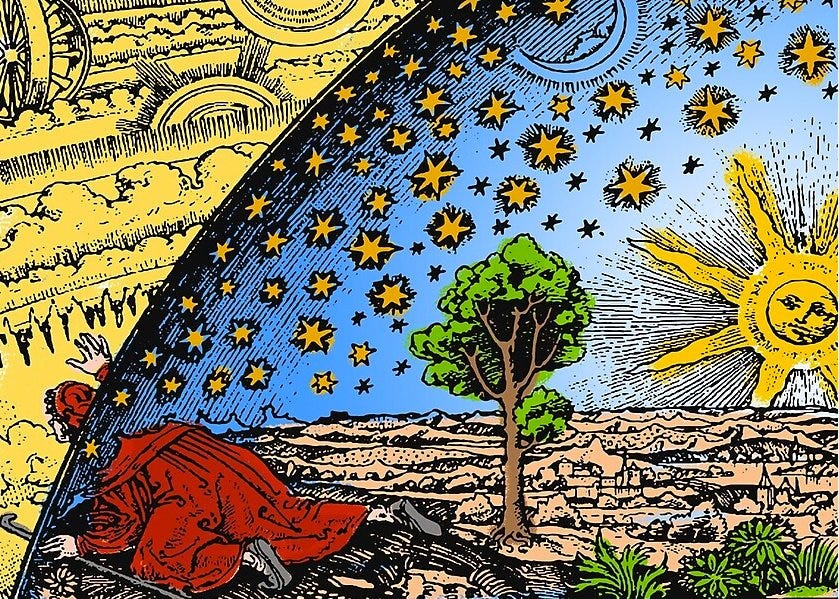
These research insights were brought to you by… AI. My fall hermitage consisted of hundreds of hours with LLMs asking every question about every topic in my research area. Everything from the very basics of probability to deep dives into massive codebases. No question is too stupid for the AI. The AI is always ready to help and never tires. The AI will answer almost anything you ask it. The AI is your friend.
Bringing AI into my research workflow has changed my understanding of scientific discovery. Basically, it seems like the only things between you and a paper with novel insights (in any field) are:
a deep understanding of the fundamental building blocks of the field,
an idea of what the bleeding edge of your field is like,
a sense of taste for what problems/questions actually matter,
patience.
AI is perfectly built to help with points 1-2 because it has read basically most of humanity’s written knowledge and you can ask it infinite questions about any textbook, paper, or topic you’re interested in. And once you nail down 1-2, it’s a lot easier to understand what problems actually matter (3).
The fourth point sounds simple but it can’t be overstated: the understanding needed to produce novel research seems to require extended periods of settled work and reflection with physical and emotional stillness. The understanding is not just a logical “I’ve memorized that A comes after B so that implies C.” It’s an understanding that’s felt in your body. An understanding so clear it’s effortless and almost feels obvious. If you have to scrunch up your face to explain something, you’re not there yet.
Unfortunately, the modern world doesn’t set you up for this level of insight, by default. It requires extended periods of reflection and stillness. It requires lots of rest. It may even require you to writhe around the floor of your living room. But if you allow yourself to sink into this stillness, eureka moments will abound. The insight will burst out from your heart and into the world and you won’t even have to try.

II. Revelations
The experience of writing this paper has completely changed my intuitions on how to learn hard things. Whenever I run into a confusing topic, there’s less of a focus on the complexity of the problem and instead I interpret the confusion as a sign of not having the right building blocks in my tool belt (yet). But once I do, the next steps will be almost obvious. It seems like novel research becomes almost inevitable if you sit down with an LLM, a bunch of papers/textbooks, and enough time to simmer in ambiguity.
Unfortunately, not all fields are well-positioned for novel research using this method. For example, your field might be developed by practitioners that leave little written record, i.e., they rely on tacit knowledge. Or your field’s cultural heritage might subtly (or overtly) reward unintelligible work, i.e., experts like big words. David Chapman illustrates this phenomenon in his recent post on the difficulties of learning “serious” mathematics (bolding is mine):
The central aesthetic of mathematics is to make things as difficult to understand by writing down in a “proof” the absolute minimum amount of information needed to verify that you did understand something without letting you know how you understood it.
Michel Foucault also alluded to this when talking about the celebrity culture around philosophers in France:
In France, you gotta have ten percent incomprehensible, otherwise people won’t think it’s deep–they won’t think you’re a profound thinker.
Clearly, cultural or professional incentives sometimes keep the work hard to read. But it could be worse: in some fields you can’t even read the work! For example, a couple years ago I wrote a paper on low-cost positioning systems which is now behind a paywall.
I digress. The point is that if your field happens to be relatively low on big words and high on sharing, it makes it very easy for both you and the AIs to find all the relevant work, understand it, and build on it.
Incorporating AI into my research workflow has led to massive productivity gains. For example, in my newest paper I use a concept from information theory called directed information. For weeks I was stuck trying to find a mathematical connection between exploration and sequential decision making. And then one day I dump all my notes into an LLM and it immediately points me to some relatively obscure literature from the 90’s describing directed information, which eventually led to the ideas presented in my paper.
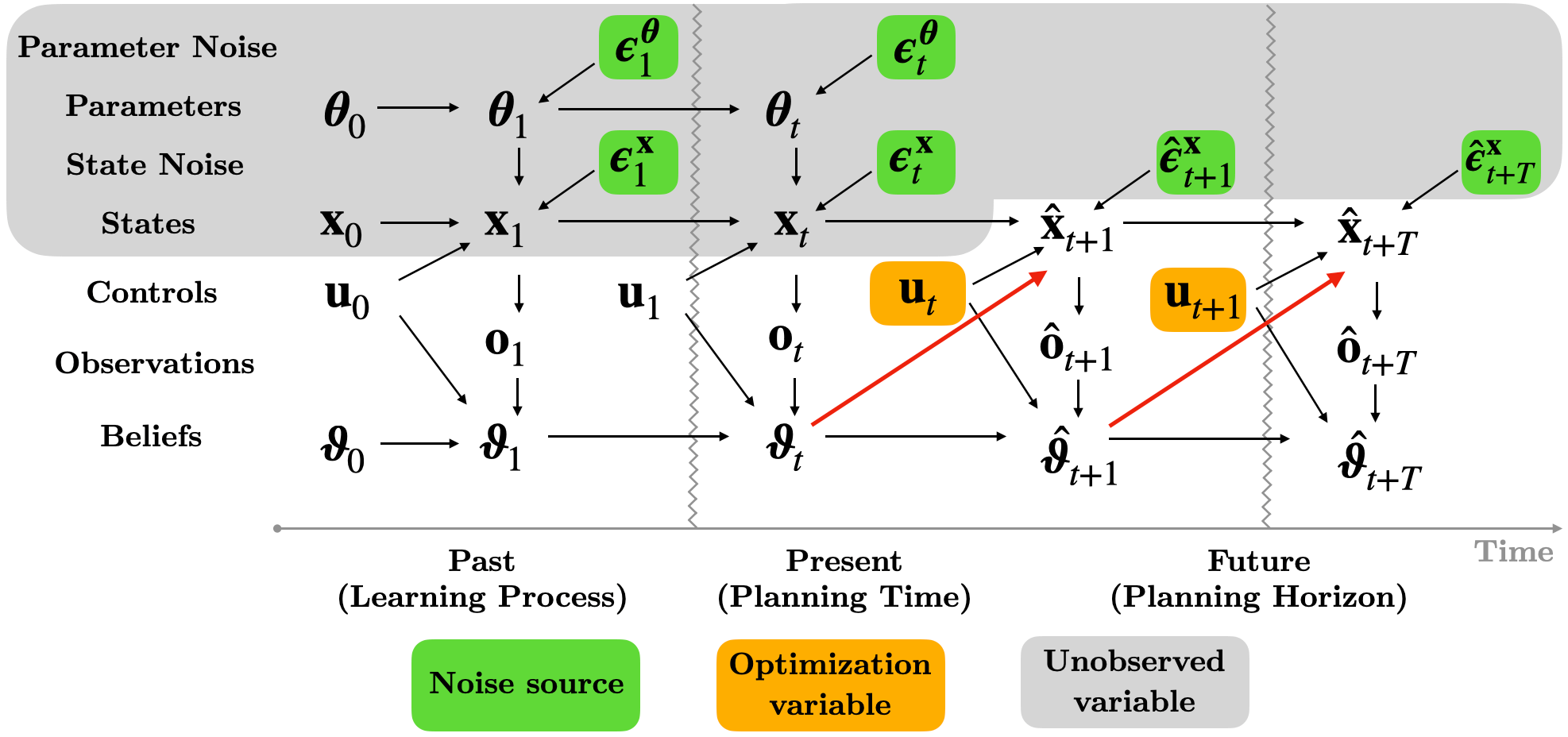
Given enough time it is likely I would have found this literature anyways, but this sped up the discovery and learning process so much that 1) I can’t see myself going back to the old way of doing things, and 2) I’m surprised I ever learned anything in college before these tools existed. Similar experiences have been reported by researchers in mathematics, quantum physics, and machine learning.
And don’t even get me started on the productivity gains in coding. For example, with the help of Claude Code I wrote a whole reinforcement learning library in less than two days. There are many RL libraries out there, but this one is custom-made with features that fit my particular flavor of research, and it has been incredibly useful.
At the moment of commitment the entire universe conspires to assist you - Goethe
This experience has expanded in my horizons in many ways. For example, it solidified my desire to pursue a career in AI research. It’s been a rocky 4 years, many of which I believed I wasn’t smart enough for this. There’s still much work to do, but this is what my heart pulls me to, and you have to pay attention to that.
It’s also gotten me incredibly excited about the future. Imagine if everyone used AI like I did! People are no longer limited by being born in the right place/time and having access to good education: anyone has at their fingertips a tireless, superintelligent tutor ready to answer any question about almost any topic! And it’s not limited to esoteric information theory (for example, see this tweet). All it takes is curiosity and patience and you can learn anything!
III. Readings
And here’s a list of some interesting things I read this month:
AI
Technical
Understanding deep learning requires rethinking generalization
From Entropy to Epiplexity: Rethinking Information for Computationally Bounded Intelligence
Epistemology
Spirituality
Rob Burbea’s talk: Questioning Awakening. HIGHLY recommend it.
Blogpost 21/100