

I used to think that optimism was only a tool for getting through difficult situations. A mindset meant to keep your head up and give you the glimmer of hope you need not to give up. Recently, however, I’ve discovered that optimism is, in fact, a required ingredient of great work. By great work I mean the kind of work that happens at the cutting edge of a field. It’s the kind of work that exists on the boundary of the known and the unknown, between understanding and confusion, between enlightenment and ignorance. If you want to do great work, optimism is not just a defensive tool to keep you from giving up, but the very paintbrush with which you build the future you want to see.
A concrete example: many people believe that if we continue to develop artificial intelligence we may get to a point where it is so much smarter than us that it will be completely uncontrollable, and will not just take our jobs, but will also kill us all. It is true that building superintelligent machines raises a bunch of valid concerns. It is also true that no one really knows how to guarantee that superintelligent computers will not harm us. We really are straddling a fine line, and the stakes are very high. However, the only way of ever hoping to find a solution starts by believing one exists. It begins by imagining that, perhaps, there could be a future in which human lives are infinitely better thanks to AI, and then making an earnest attempt at building this reality.
The same thing happens in one’s personal life. Let’s say you’re going through a terrible life circumstance. First of all, I’m sorry you’re going through this and it is likely worth acknowledging the difficulty of the situation. It may be worth feeling hopeless for a day or two. But once the rush of emotion passes, realize that it is way more likely you’ll find a solution to your situation if you have some faith that a better future is possible, and keep your head cool and on a swivel, looking for ways through.
The optimism I’m advocating for is not blind to reality. It is not meant to delude yourself into ignoring strong evidence against your assumptions. In fact, it does the very opposite: it welcomes evidence against it as a way of refining understanding. Any data that challenges your assumptions can also be used to sharpen them. But this only happens if you stay epistemically humble: open to being wrong, even about the thing that you’ve thought so hard about, for so long.
You might say: “Fernando, but my situation is special and there really is no coming back from it because of XYZ.” It is true that some situations are, in fact, very fucked. In those situations, “ideal” solutions are completely off the table. Do not despair, however, because solutions still exist (they just might not look the way you expect).
Here’s a concrete example: let’s say you started a company, it is now failing, and no amount of financial gymnastics will keep it afloat. Your company, which is possibly your life’s work, your magnum opus, truly is doomed and nothing will stop it. Well, after panicking for a bit, examine the feeling. Perhaps the company represented status, money, and structure in your life and made you feel safe. Well, it turns out there are other ways of feeling safe that don’t require owning a successful company, for example, meditation. Exploring them may take you to some unexpected places, but it will solve your problem.1
Here’s another interesting fact: the way we decide whether something is “optimistic” vs. “realistic” is anchored by what we think the rules of the game are. By rules of the game I mean, for example, the laws of physics. The key insight is that, frequently, and especially when we’re at the edge of the known, the rules of the game are wrong.
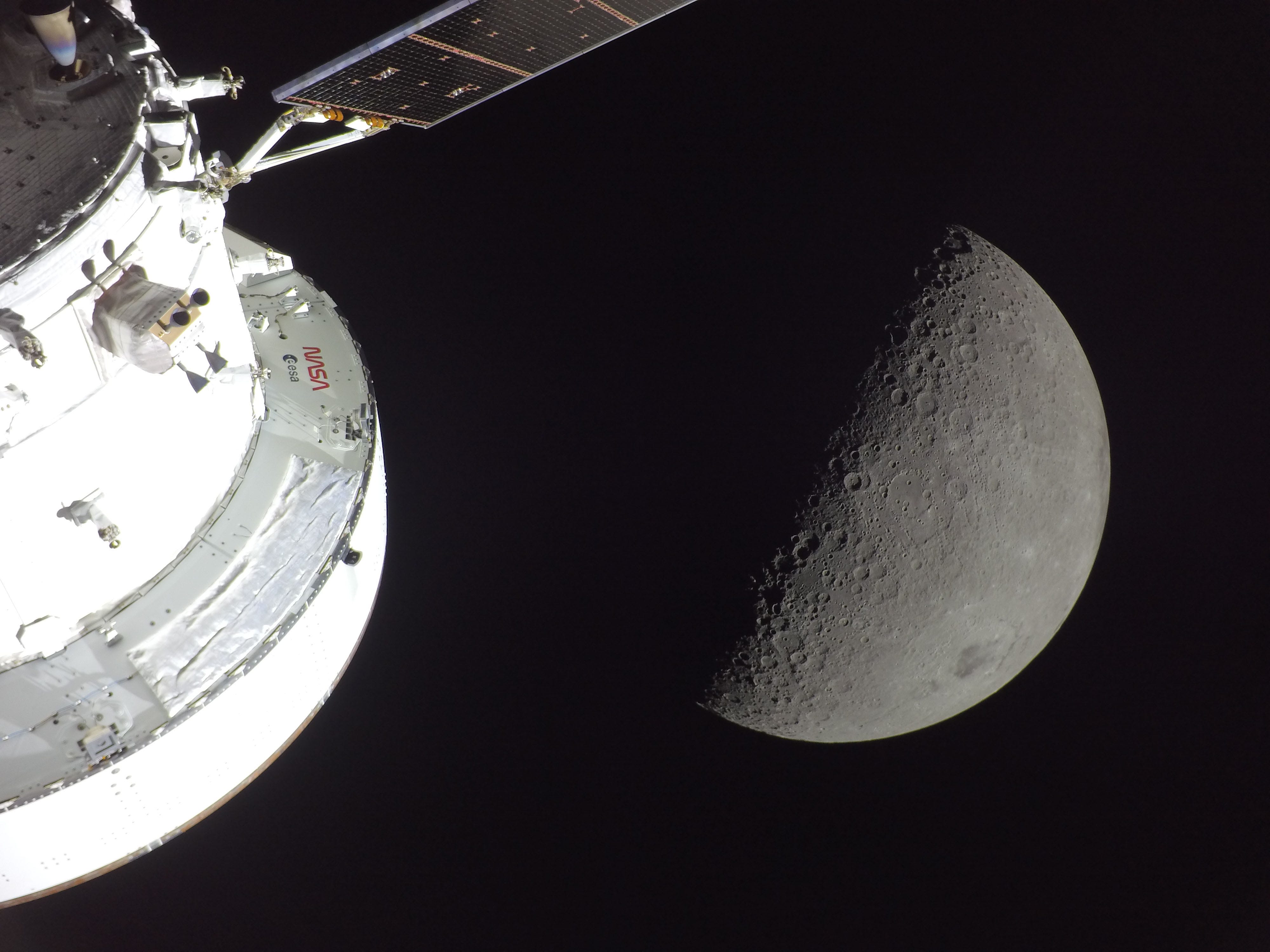
For example, the idea of space travel was inconceivable when we thought that stars were painted dots on a solid dome. It wasn’t that it seemed like space travel was a very hard thing to do, but that the rules of the game at the time simply did not describe 1) planets as places we could visit 2) flight as something humans could do. The rules of the games we play as humans will frequently tell you many things are impossible. If you pay enough attention, you’ll find find the gaps in reality where the rules are incomplete. Remember: the map is not the territory.
The kind of optimism I’m advocating for recognizes not only that the world might work differently than you think, but that having faith that a solution exists is precisely the attitude that eventually manifests it. The world is frequently more malleable than you think, but not in the ways you expect. And the only way to pierce through its thin veil of inertia is to keep your mind quiet and your senses open to the soft breeze blowing through a gap in the veil.
What if it all turns out better than you ever imagined?
23/100 blogposts
This example is not meant to be patronizing at all. Losing your job is absolutely not cool, especially if people depend on you. But the point I’m trying to illustrate is that our “problems” are frequently not what we think they are. And optimism helps 1) make sense of this and 2) find a solution to the actual problem.
The map is not the territory! Ad astra